
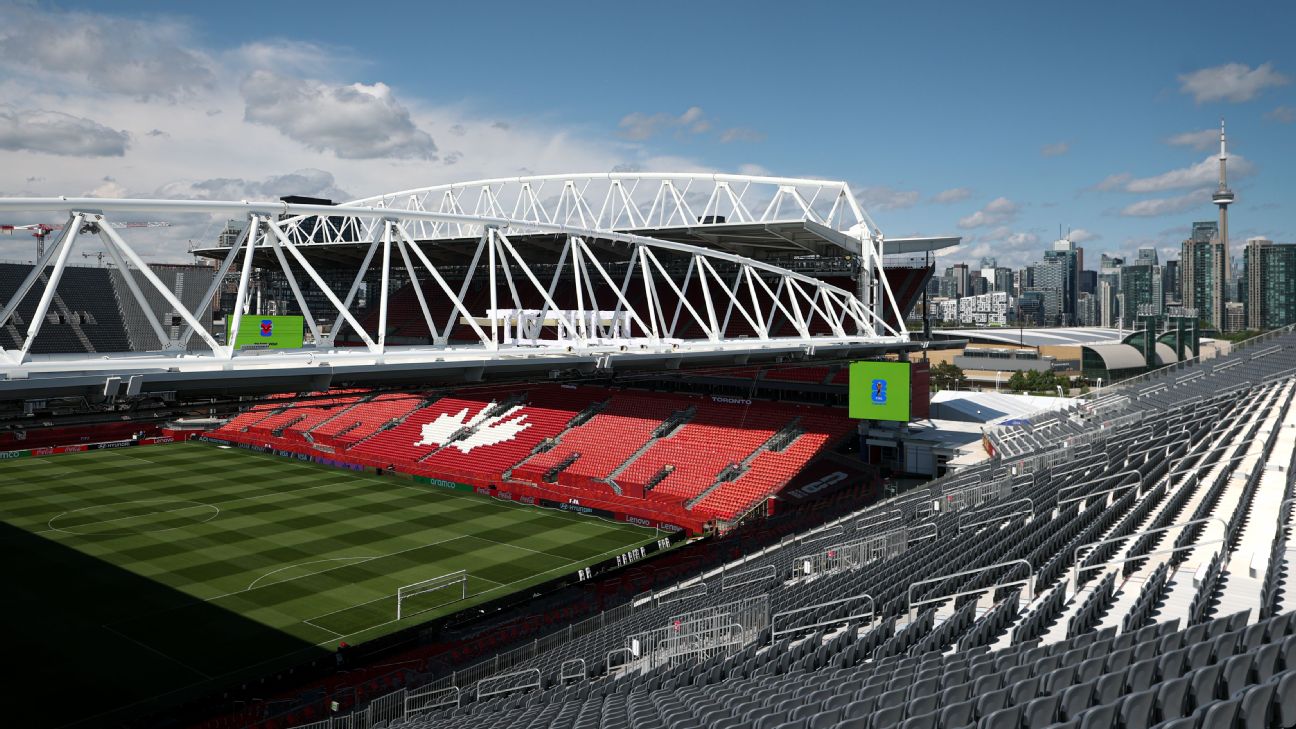
As the international countdown toward the 2026 FIFA World Cup accelerates, municipal planners and FIFA delegates in Toronto have unveiled the latest phase of BMO Field's extensive multi-million dollar transformation. The venue, designated as "Toronto Stadium" for FIFA-sanctioned fixtures, has undergone significant structural enhancements engineered to expand capacity from its standard 30,000 MLS footprint to over 45,000 spectators while adhering to the most stringent international tournament protocols.
Engineering an Intimate Global Stage
Unlike massive NFL coliseums across North America that can accommodate upwards of 75,000 patrons, Toronto’s strategy has centered on intimacy, atmosphere, and architectural precision. The expansion features modular upper-tier grandstands suspended behind the north and south goalmouths, integrated seamlessly with the stadium’s signature red roof canopies.
Key architectural and logistical upgrades unveiled this week include:
- Hybrid Reinforced Playing Surface: Installation of an advanced SISGrass hybrid system that intertwines natural perennial ryegrass with 5% synthetic microfibers, providing elite stability and shock absorption for grueling international fixtures.
- Expanded North & South Grandstands: Modular lightweight steel seating decks adding 15,736 temporary seats, each engineered with optimal sightlines and steep rake angles mimicking European cathedrals.
- Cutting-Edge Hospitality & Broadcast Hub: A 4,000-square-foot broadcast center equipped with 8K HDR broadcast fiber infrastructure, along with state-of-the-art VAR (Video Assistant Referee) control suites.
- Sustainable Transit Integration: Dedicated light rail and GO Transit platforms directly connected to Exhibition Place, facilitating 20-minute departures for over 35,000 matchgoers.
FIFA Delegation Verdict: "A Masterclass in Urban Integration"
FIFA Chief Tournament Officer Colin Smith led an operational delegation through the facility on Tuesday, expressing unanimous satisfaction with the pace and quality of construction. "Toronto has managed to preserve the soul and acoustic intensity of an authentic football ground while scaling up to meet the staggering global demands of a World Cup," Smith remarked during a media briefing along the lakeside concourse.
"We wanted Toronto to be an electric pressure cooker. When 45,000 supporters pack into Exhibition Place on a cool summer evening, the acoustic energy will rival any venue in world football."
— Sharon Bollenbach, Executive Director of FIFA World Cup 2026 Toronto Host Committee
Economic Footprint & Lasting Legacy for Canadian Soccer
For Maple Leaf Sports & Entertainment (MLSE) and Toronto FC, the stadium enhancements represent a transformative generational investment. Once the World Cup concludes, portions of the hospitality suites, upgraded training facilities, and LED illumination rigs will remain permanently in place, providing the Reds and the CFL's Toronto Argonauts with one of the most technologically sophisticated sports venues in North America.
With six high-profile group and knockout stage matches scheduled at BMO Field—including a historic opening fixture featuring the Canadian Men's National Team—Toronto is positioning itself at the epicentre of football fever. Ticket demand has already shattered national registration records, confirming that the city's investment is poised to pay massive dividends on the world stage.